
Best Drayage TMS Software: An Honest 2026 Comparison

We went looking for the best drayage TMS for this piece and ended up reading Reddit threads instead of vendor pages. Not a knock on Reddit. It's that every vendor page says roughly the same thing, real-time visibility, purpose-built for drayage, trusted by carriers everywhere, and none of it tells you anything. The threads do. Real dispatchers, arguing in public, about PortPro, TMSEZ, DrayMate, and Trinium, with their actual complaints attached.
So this isn't a ranked listicle. It's what held up once we checked the marketing against the people running these systems every day.
One pattern showed up before we even got to the comparison: picking the TMS was never the whole decision. Almost every operator in these threads was also running something else alongside it, a custom integration, a hired hand, a second tool, for the parts the TMS leaves manual. More on that after the comparison.
Nobody agrees, and that's the useful part
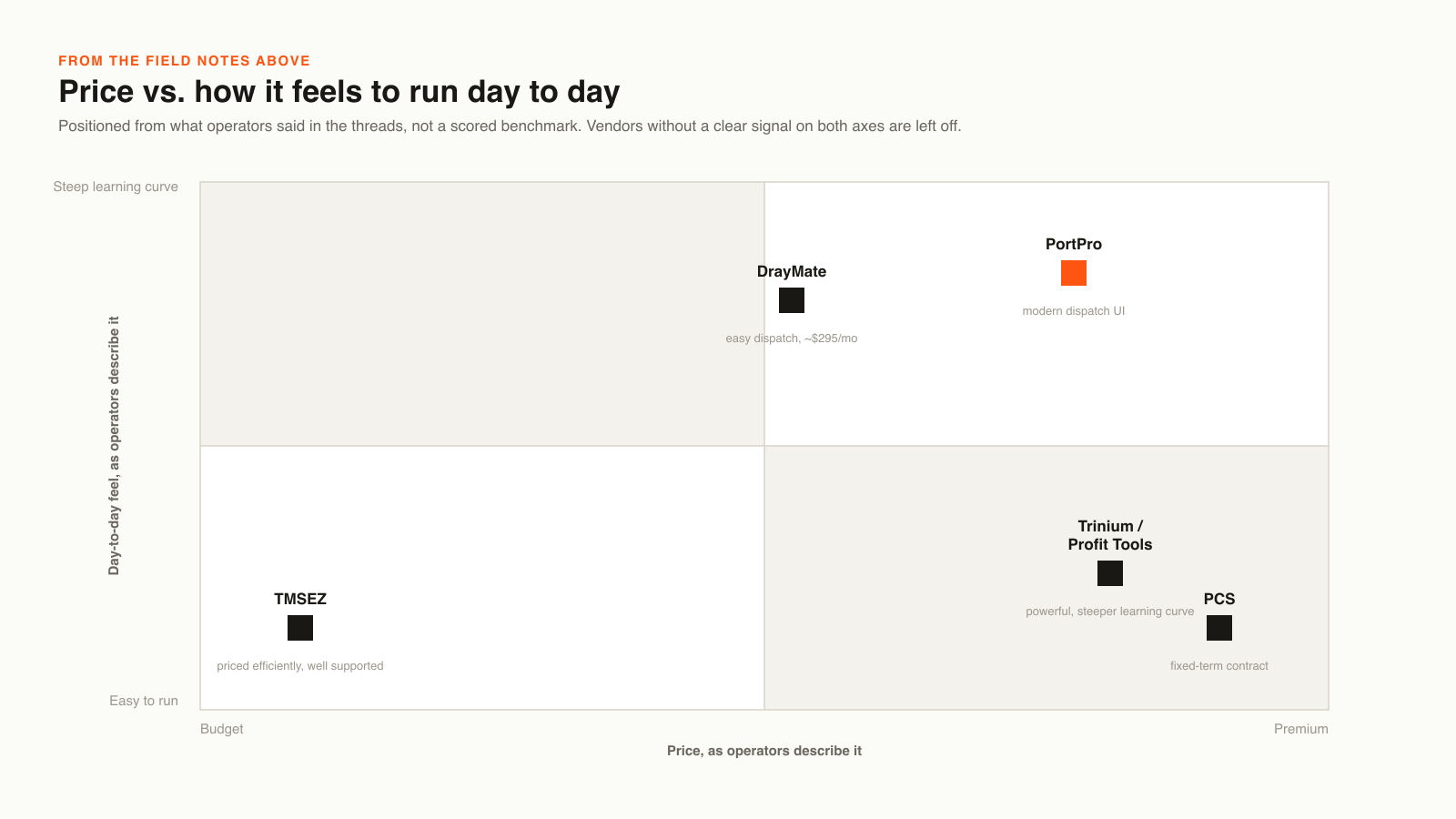
Search "drayage TMS" and actual Reddit threads outrank most of the vendor sites. In one r/FreightBrokers thread, someone shopping for a new system just asked: what do you use, what do you like, what do you hate. A dozen people answered. None of them agreed. PortPro came up the most and drew the most feedback, often from the same person in the same breath. TMSEZ got recommended over and over for being priced efficiently and well supported, with a UI more than one person called "funky." Alvys, built for brokers, got flagged as a better fit for brokers than pure drayage carriers. DrayMate, Trinium, Profit Tools, PCS: every one of them had a defender and someone with a different experience.
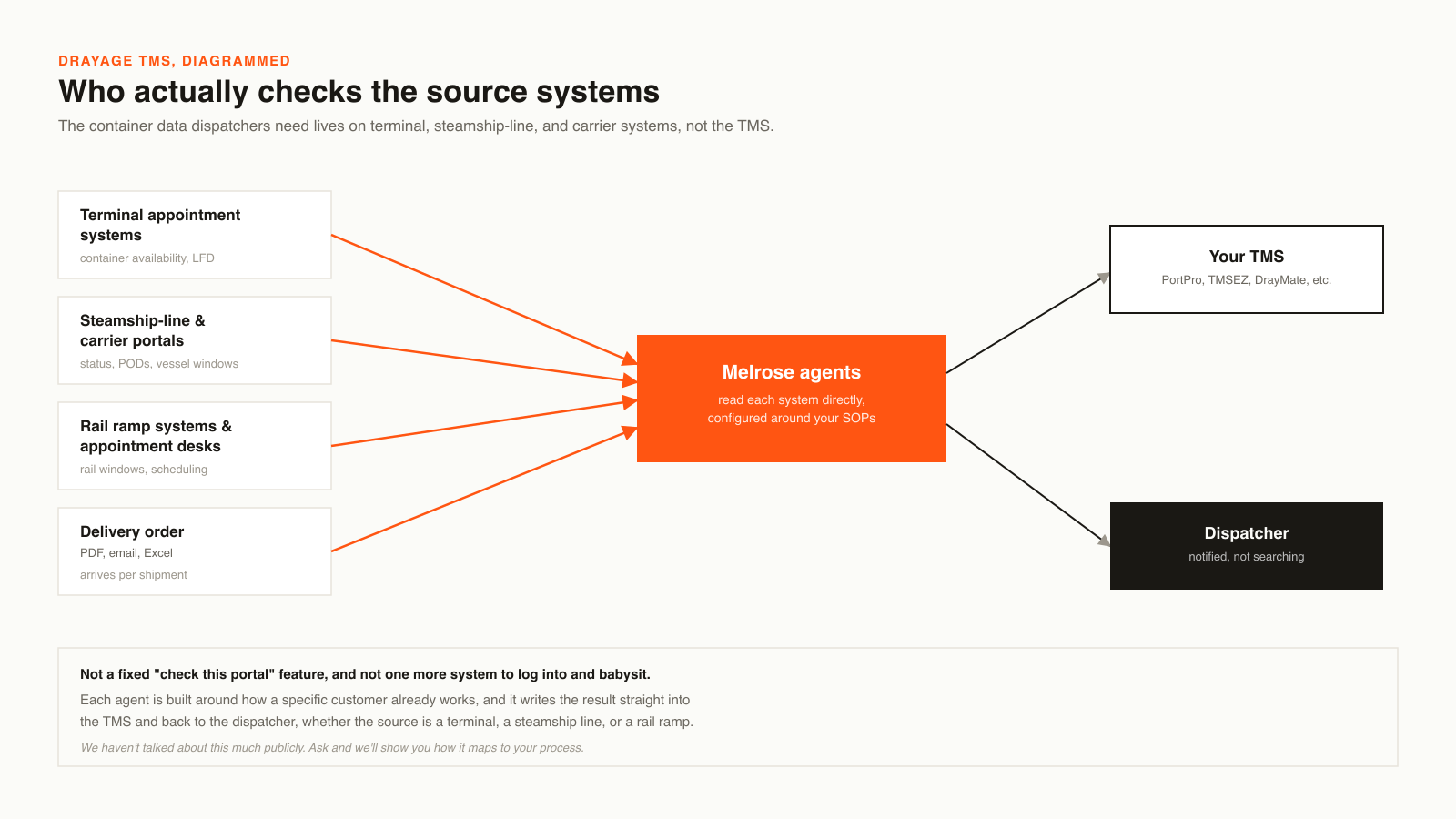
Here's the more interesting part. In a separate r/logistics thread, even the dispatcher who seemed happiest with their setup admitted "no drayage TMS will ever be great." Not because the software is badly built. Because the data that actually matters, vessel and rail window shifts, container availability, last free day, doesn't live in the TMS. It lives on terminal and steamship-line systems that no TMS vendor controls, and most of those systems don't expose it through an API. So the dispatcher checks a dozen port websites by hand, every day, TMS or no TMS. Nobody got into drayage because they love that part. That ceiling is what every product on this list is built under, and it's worth knowing before the next demo promises you "real-time visibility."
The field, compared
Here's what we found once we matched the marketing pages against what people running these systems actually said. The common thread, cheapest to most enterprise: a TMS handles dispatch and billing, but the delivery-order intake and EDI feeding it stayed manual. That's why a lot of the setups in these threads paired the TMS with something else, no matter which row below they landed on.
PortPro (drayOS)
Drayage TMS- The largest install base in drayage, so hiring and support communities assume you're already on it
- Modern dispatch interface, one dispatcher called it “pretty much has this down as best as possible”
- Frequent product releases and the broadest third-party integration surface
- Reporting has some gaps that matter for running the business: multiple operators wanted an easier way to see margin per load or run a driver payroll report
- Support response times came up as a point of feedback in more than one separate thread
- Has a real API to build against, which is a real plus, though it's evolved enough that a couple of teams had to adjust custom integrations mid-project
- Container availability data is still only as good as the terminal feed behind it, same as everyone else
Best forDrayage carriers and brokerages that want the biggest, most established platform in the category and are willing to pay for it.
Still the default choice for most drayage operations. Worth planning for some ramp-up time around reporting and integrations.
TMSEZ
Excel-based drayage & intermodal TMS- Priced efficiently for small fleets, and operators consistently call it the best value in the category
- Excel-based structure means no dedicated IT support is needed to run it
- Support gets singled out as responsive, thread after thread
- The interface is more basic than newer cloud platforms
- There's a bit of a learning curve before the reporting pays off, despite the Excel foundation
Best forSmall drayage carriers who want an efficiently priced, transparent system and don't need a polished interface.
The one drayage operators keep telling each other to try. Efficiently priced, well supported, and worth it if you don't need a polished interface.
DrayMate
Cloud drayage TMS- Dispatch is described as easy to run day to day
- Invoicing is the feature operators single out as genuinely good
- Starts around $295 a month, a higher starting cost than TMSEZ
- Order entry and reporting are the two areas one long-time user thought could go deeper
- Container availability relies on the same third-party APIs everyone else works with, so it isn't bulletproof either
Best forCarriers who want strong dispatch and invoicing out of the box without an enterprise price tag.
A solid, dependable option. Same visibility ceiling as everything else here, at a higher starting cost than TMSEZ.
The rest of the field, in one line each
- Trinium (WiseTech/CargoWise): the enterprise choice for fleets from 10 to 1,000+ drivers, more capable than PortPro with a heavier lift to run.
- Profit Tools / VI Intermodal: worth a look if you're already inside the Cargowise ecosystem, otherwise evaluate newer options first.
- Alvys: strong for brokers and mixed OTR fleets, built more for that use case than for pure drayage.
- Envase: the reporting layer some operators pair with a different TMS for dispatch.
- PCS: understand the fixed-term contract and get the port and rail data workflow demoed live before you sign anything.
What the threads know that the sales page won't tell you
Same story, different words, in almost every thread we found. The complaint was never really about which TMS to buy. It's that terminal appointment systems, steamship-line portals, and rail ramp data all live outside the TMS, so the TMS is only ever as current as whoever last checked it by hand. A dispatcher can be running the best system on this list and still lose the morning to five different port websites, just to find out if a container is actually available.
Where an automation layer changes the math, and where it doesn't
Melrose isn't a drayage TMS. We're not going to pretend otherwise. It sits on top of whichever one you already run, most commonly PortPro, and goes after the specific manual work that shows up in every thread above: reading delivery orders, watching EDI, reconciling milestones. Smaller claim than "replace your TMS," and the one that's actually true.
Remember the dozen port websites from a few sections up? That's the same shape of problem Melrose's agents go after too, not just order entry and EDI. We haven't talked about this much publicly, but the same agent framework reads terminal, steamship-line, and carrier systems directly, built around how a specific customer actually works, and writes the result straight into the TMS and back to the dispatcher. It isn't a fixed "check this portal" feature, and it isn't one more system to log into and babysit. It's automation built into the workflow you already run, including absorbing changes on the other end. When a TMS updates its API, like a couple of the PortPro integrations above ran into, an agent built around a workflow adapts to it instead of breaking silently the way a fixed integration does.
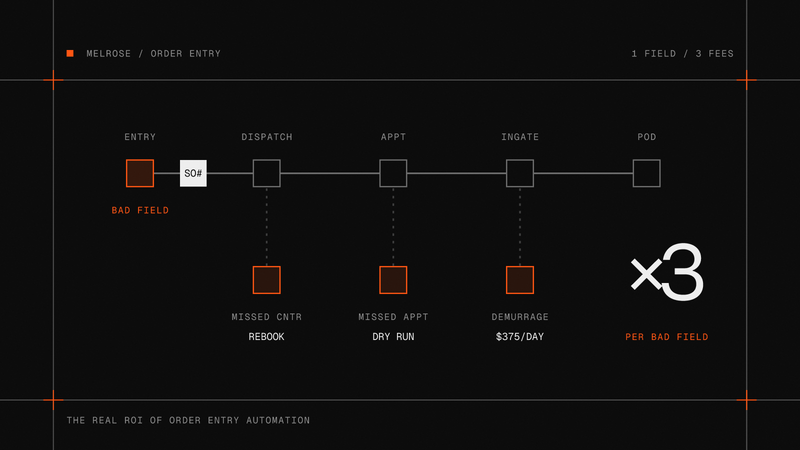
Take order entry, the single most repeated complaint in the field above. RoadEx, a multi-port drayage carrier, was spending up to five minutes per order re-keying shipment details into their TMS and every customer portal by hand, then doing it again overnight whenever a driver moved freight. After Melrose sat in front of that workflow, RoadEx cut manual shipment processing by 70% and onboarded a 10,000-container account without adding headcount.
Demurrage and detention, the cost-management gap operators flag on every TMS above, is the other place reporting doesn't fix itself. Gulf Winds International was losing time to manual order processing across multi-page PDFs and non-standard CSVs before automating that intake with Melrose. The result: 15,000 hours of manual work eliminated annually and a 20% reduction in demurrage costs year over year, because orders and their charge windows stopped depending on someone catching them in time.
One thing this doesn't fix. If your complaint about PortPro is that you can't see margin per load or run a driver payroll report that makes sense, that's baked into the TMS, and a layer on top of it won't undo that. Same with TMSEZ's interface. Choosing a TMS and adding automation on top of it are two different decisions. Worth keeping them that way instead of hoping one purchase solves both.
Where this came from
The operator quotes and vendor complaints above are pulled directly from two threads: r/FreightBrokers, “Drayage TMS” and r/logistics, “Dispatch System for drayage carrier”. Read them yourself if you want the unedited arguments, including the parts that didn't make it into the table above.
Frequently asked questions
What is the best drayage TMS?
There isn't one universal answer. PortPro is the default for most carriers and brokerages and has the largest user base, TMSEZ is the best value for small fleets willing to trade polish for price, DrayMate is a solid cloud mid-tier option, and Trinium fits larger enterprise fleets. The right pick depends on fleet size, budget, and whether you also broker freight, more than any single feature.
Do I need anything besides a drayage TMS?
Most operators end up running something alongside it. In the threads we read, the TMS handled dispatch and billing, but delivery-order intake and EDI still needed a person or a separate tool to keep them moving. That's the gap an automation layer like Melrose is built to close, on top of whichever TMS from this list a carrier picks.
Is PortPro the best drayage TMS?
It's the most widely used and generally well regarded for dispatch, but it's not without tradeoffs. Operators consistently mention reporting gaps, particularly around margin per load and driver payroll, along with support response times and API changes that have affected third-party integrations. It's a strong default, not an uncontested winner.
What's the best TMS for a small drayage carrier?
TMSEZ is the option operators recommend most often for smaller fleets, mainly on price and support responsiveness, with the tradeoff being a more basic, Excel-based interface. DrayMate is a step up in polish at a higher starting price, around $295 a month.
Why can't any drayage TMS show real-time container availability?
Because that data originates outside the TMS, on terminal appointment systems, steamship-line portals, and rail ramp systems that don't universally expose APIs. Every TMS in this field is limited by how current the terminal's own data is, which is why dispatchers still end up checking port websites by hand. Melrose's agents close part of that gap by reading those same systems directly and writing the result into your TMS, but that's a layer built on top, not something baked into the TMS itself.
Does Melrose replace a drayage TMS?
No. Melrose runs on top of the TMS you already use, most commonly PortPro, and automates the order entry, EDI monitoring, and milestone syncing that the TMS itself still leaves manual. Choosing a TMS and adding an automation layer are separate decisions.
Freight-ops notes, in your inbox
Product notes and playbooks on automating the manual work in logistics. No spam.